Thinking about more space, starry skies, and a quieter pace without giving up Austin access? Buying Hill Country acreage in Dripping Springs can deliver all of that, but rural property works differently than suburban lots. You will be weighing wells, septic, restrictions, taxes, and build costs long before you sketch a floor plan. This guide gives you a clear, practical roadmap so you can buy with confidence and protect your investment. Let’s dive in.
Why Dripping Springs acreage
You are roughly 23 to 26 miles from downtown Austin, often a 30 to 45 minute drive depending on route and traffic, which keeps work and culture within reach. If you want privacy, views, and room to spread out, the Hill Country around Dripping Springs offers compelling options. The area’s International Dark Sky Community designation also pairs that privacy with a real night sky.
Market-wise, acreage pricing varies widely. Active listings in late 2025 and early 2026 demonstrated per‑acre spreads from about $65,000 to $275,000 depending on size, views, improvements, and restrictions. For context only, Zillow’s local ZHVI placed a typical Dripping Springs home value in the mid 600s to high 600s during the same period. Expect land, site work, and custom improvements to exceed the total cost of many neighborhood homes.
For Austin commuters, you can confirm approximate distance using a simple drive calculation from Dripping Springs to Austin through resources like this commute estimator.
Water first: wells and service
Water is the single most important question on rural land here. Much of western Hays County sits inside the Hays Trinity Groundwater Conservation District, which monitors aquifers and can limit new wells or curtail pumping during drought. Before you write an offer, confirm whether the parcel lies in the district and what rules apply.
Start with these checks:
- Review any existing well’s history. Ask for well completion logs, recent pump tests, production notes, and water quality results. You can also search district and state databases linked from the HTGCD well information page.
- Confirm the current drought stage and whether new well permits are being issued. Curtailments can affect irrigation and livestock plans, and sometimes pause certain permits. Check status directly with HTGCD.
- Verify whether there is a public water option. Some properties are served by local utilities like the Dripping Springs Water Supply Corporation, while others rely on private wells or hauled water. During scarcity, providers may limit bulk or construction water, as reported in this local coverage of supply restrictions.
- Budget realistically for drilling if no well exists. Texas well costs vary by depth, rock, and access, but a completed domestic well often falls from several thousand dollars into the low five figures, with difficult sites costing more. See an overview of typical ranges and variables in this Texas well cost explainer, then get site‑specific bids.
Tip: Even with a strong well, consider storage tanks and a drought plan. The Hill Country’s aquifers are sensitive to sustained dry periods, so redundancy helps protect daily life and landscaping.
Septic systems and build planning
If your parcel is outside city sewer, you will need an on‑site sewage facility. Hays County is the permitting authority in unincorporated areas and requires permits for all installations and repairs. Designs must meet state standards and any locally approved stricter rules.
Key steps to take early:
- Pull the county OSSF permit file for any existing system and ask for maintenance records if it is an aerobic system. Start with Hays County’s septic permit portal.
- Expect soils and slopes to drive design. Shallow limestone, karst features, or limited usable area often push you to engineered aerobic systems with drip or spray dispersal. These cost more than conventional gravity systems and require recurring maintenance.
- Build a realistic line item for septic. Conventional systems are usually the least costly where soils allow. Engineered options add installation cost and ongoing service fees. For a simple comparison of system types and maintenance expectations, review this Texas septic overview, then get a licensed site evaluation.
Ag valuation and property taxes
Many Hill Country owners lower carrying costs through Texas’ special open‑space agricultural appraisal, often called an ag exemption. Qualifying land is taxed on productivity rather than market value when it meets use and intensity standards, typically over at least five of the previous seven years. Wildlife management is a recognized pathway for some properties.
Your action plan:
- Ask the seller and the appraisal district whether the property currently has a 1‑d‑1 open‑space or wildlife valuation.
- If you need to establish it, learn the county’s degree‑of‑intensity standards for your chosen activity, keep documentation, and apply by the local deadline. The Texas Comptroller’s guide to agricultural and wildlife valuation is a reliable starting point. Review forms and rules at the Comptroller’s ag appraisal page.
- Watch for cap‑rate changes that can affect productivity values year to year. The Comptroller publishes annual guidance, which influences the calculation.
Restrictions, zoning, and dark‑sky rules
Jurisdiction matters. Parcels inside Dripping Springs city limits or its extraterritorial jurisdiction are subject to city ordinances and development review. Unincorporated Hays County enforces subdivision, floodplain, and on‑site wastewater rules but generally does not have county‑wide zoning.
Dripping Springs is also an International Dark Sky Community, which means exterior lighting often follows thoughtful standards to protect the night. If you love stargazing or plan exterior lighting, review the city’s night‑sky program and confirm any neighborhood lighting covenants.
Beyond public rules, many acreage tracts carry recorded deed restrictions, conservation easements, or special district obligations. These can regulate livestock, outbuildings, setbacks, exterior materials, and short‑term rentals. Pull the title commitment and the full schedule of restrictions during your option period.
Topography, soils, and buildability
The Hill Country’s beauty comes with real geology. Expect shallow limestone, slopes, and karst features like sinkholes or fissures. These conditions shape foundations, driveway placement, well yield, and septic suitability.
What to do before you build:
- Order a modern boundary survey and a topographic site plan. Map slopes, drainage, and potential building pads.
- Get soils testing and, on steeper sites, a geotechnical opinion. This helps you estimate foundation and retaining wall costs and sets realistic expectations for septic design.
- Coordinate early with your OSSF site evaluator and county reviewers so your house plan fits the soils and space available.
Access and utilities
Rural access is not all the same. Some parcels front county‑maintained roads, while others rely on private easements or shared roads that owners must maintain. Hays County also has platting and driveway permit requirements that can affect timelines and budgets. See the county’s development FAQ for permitting guidance.
For power, Pedernales Electric Cooperative serves much of the Dripping Springs area. Confirm the provider and any line‑extension costs at the address level, and start the process early if service must be extended. Learn more about the cooperative at PEC. Broadband service is location‑specific, so verify actual options rather than assuming fiber is available.
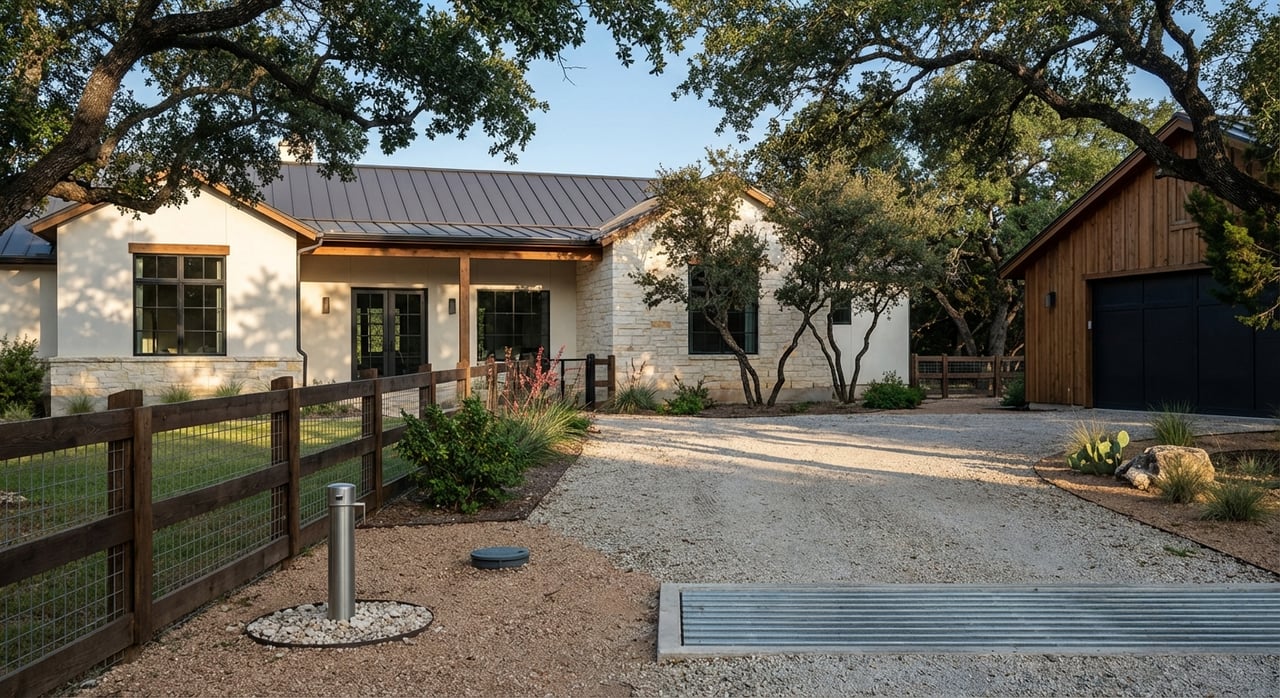
If your access is via a private road, request the recorded road maintenance agreement, understand who pays for upkeep, and budget accordingly. Culverts, drainage, and gravel refreshes are common ongoing expenses.
Budget expectations and line items
Land is just the start. Build a budget that looks beyond purchase price so you can compare options apples to apples.
- Land values: Active acreage listings in late 2025 and early 2026 showed per‑acre ranges from about $65,000 to $275,000 based on size, views, improvements, and restrictions. Confirm current ranges with multiple comparable listings before you write a contract.
- Water: Drilling costs vary by depth and rock. A completed domestic well in Texas often ranges from several thousand dollars into the low five figures, with hard rock, deeper targets, or long utility runs increasing cost. Get multiple local bids and review nearby completions. For a general overview, see this Texas well cost explainer.
- Septic: Conventional gravity systems are typically least expensive where soils allow. Engineered aerobic systems with spray or drip dispersal cost more and require ongoing maintenance. For a simple comparison, review this Texas septic overview, then obtain a site‑specific design estimate.
- Site work: Driveway and culvert, tree and brush work, erosion controls, and engineered pads or retaining on slopes can add meaningful cost. Hays County’s development FAQ outlines permits that may affect timing.
- Title and survey: Order a boundary or ALTA survey, a title commitment with easements and restrictions, and a mineral‑rights status review. Mineral ownership is often severed in Texas. Confirm surface protections and expectations up front.
Your 10‑step due diligence checklist
- Confirm jurisdiction
- City limits, ETJ, or unincorporated Hays County. This sets which ordinances and processes apply.
- Verify water
- Ask for well logs, pump tests, and water quality. Check drought stage and permitting on the HTGCD well info page. If utility water is possible, confirm capacity and connection details in writing.
- Confirm septic path
- Pull the county OSSF file and maintenance records, or plan for a site evaluation and engineered design. Start at the Hays County septic portal.
- Order title work
- Get a title commitment, recorded easements, deed restrictions, and any special district disclosures. Ask the title company to address mineral rights explicitly.
- Commission surveys and studies
- Boundary or ALTA survey, topographic map, soils testing, and geotechnical review on sloped or complex sites.
- Check taxes and ag valuation
- Confirm current status and talk with the appraisal district about qualifying activities and deadlines. Review state guidance at the Texas Comptroller’s ag appraisal page.
- Validate access
- Confirm legal access and any road maintenance agreement. If it is a private road, budget annual upkeep.
- Plan utilities
- Verify electric provider and any line‑extension costs with PEC. Check broadband options at the address level.
- Review environmental and floodplain
- Map floodplains and consider recharge or karst sensitivities that may influence septic or site work.
- Build contingencies
- If water, septic, or access is uncertain, include option‑period studies and clear exit terms in your contract. Keep a reserve for deeper wells, engineered septic, or more site work.
Work with a trusted advocate
Acreage is about possibility, but the details determine what you can actually build and how you will live day to day. With careful due diligence and the right team, you can capture views, privacy, and a true Hill Country lifestyle without surprises. If you want seasoned, discreet guidance from search to closing, connect with Camille Casper to move forward with clarity and confidence.
FAQs
What should I evaluate first when buying Dripping Springs acreage?
- Start with water, septic feasibility, and access. Confirm HTGCD status and well information, pull Hays County septic records, and verify legal road access and maintenance responsibility.
How reliable are private wells in western Hays County?
- Reliability varies by depth, geology, and drought conditions. Check the parcel’s HTGCD status, review nearby well completions, and consider storage tanks and a drought plan to add resilience.
Can I get public water on rural land near Dripping Springs?
- Some parcels are served by local utilities, while many rely on private wells or hauled water. Confirm availability and any service limits with the provider before you buy, especially during drought restrictions.
How do septic rules affect where I can build on my land?
- Soil depth, slope, and karst features drive the septic type and dispersal area. That footprint, plus setbacks, often sets your buildable envelope, so get a site evaluation early.
What is a 1‑d‑1 agricultural valuation and how does it lower taxes?
- Qualifying land is taxed on productivity value instead of market value when it meets use and intensity standards over time. Confirm current status and requirements with the appraisal district and the Texas Comptroller’s guidance.
Are there lighting restrictions because of the dark‑sky designation?
- Yes, parts of Dripping Springs follow lighting standards to protect the night sky. Review city guidance and any neighborhood covenants to choose compliant fixtures and brightness levels.
What does private road access change for me as an owner?
- Private roads shift maintenance and liability to owners or an association. Review the recorded maintenance agreement and budget for grading, gravel, drainage, and culvert upkeep.
How much should I budget beyond the land price?
- Plan for well or water connection, septic, driveway and site work, surveys, title, and potential utility extensions. Engineered septic, deeper wells, and sloped sites can add meaningful cost.