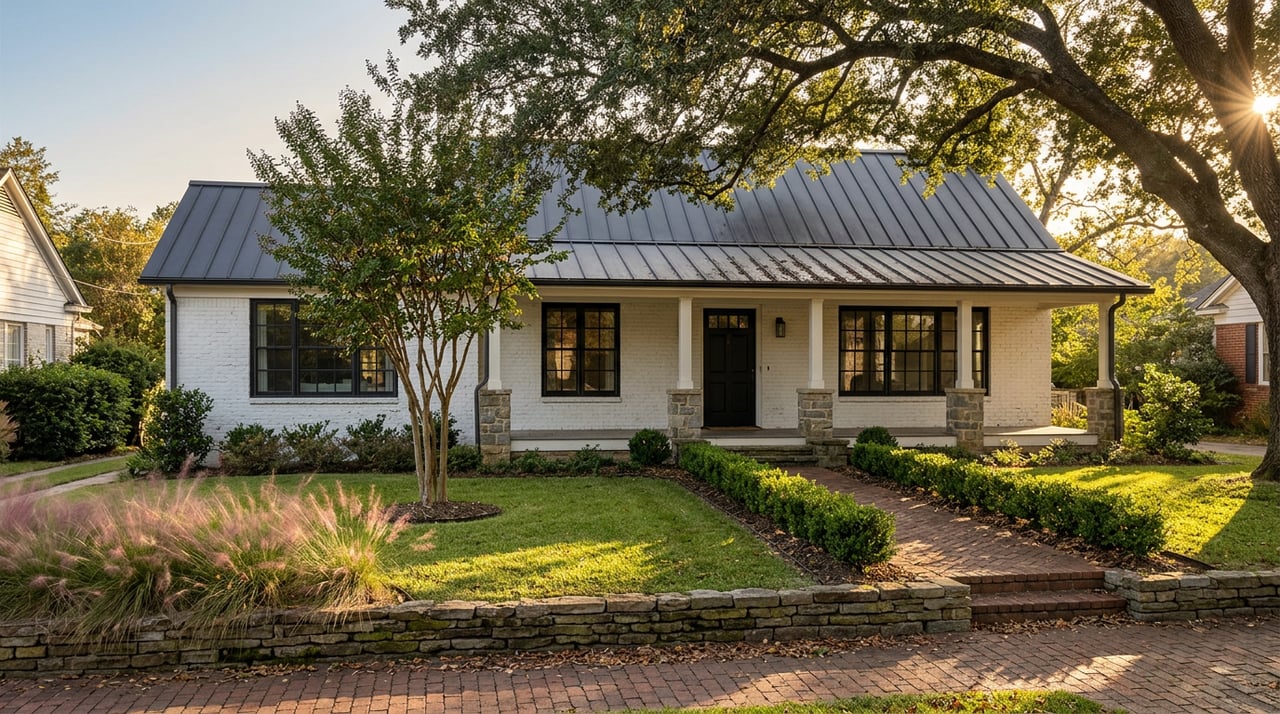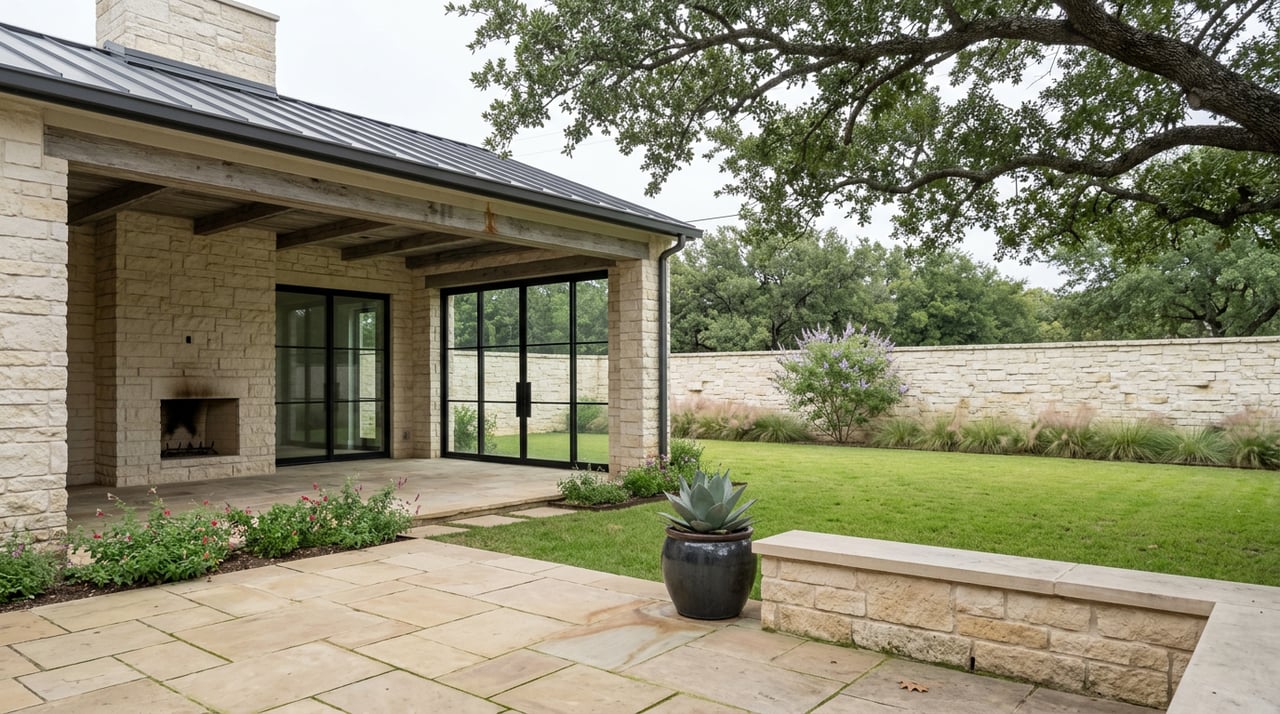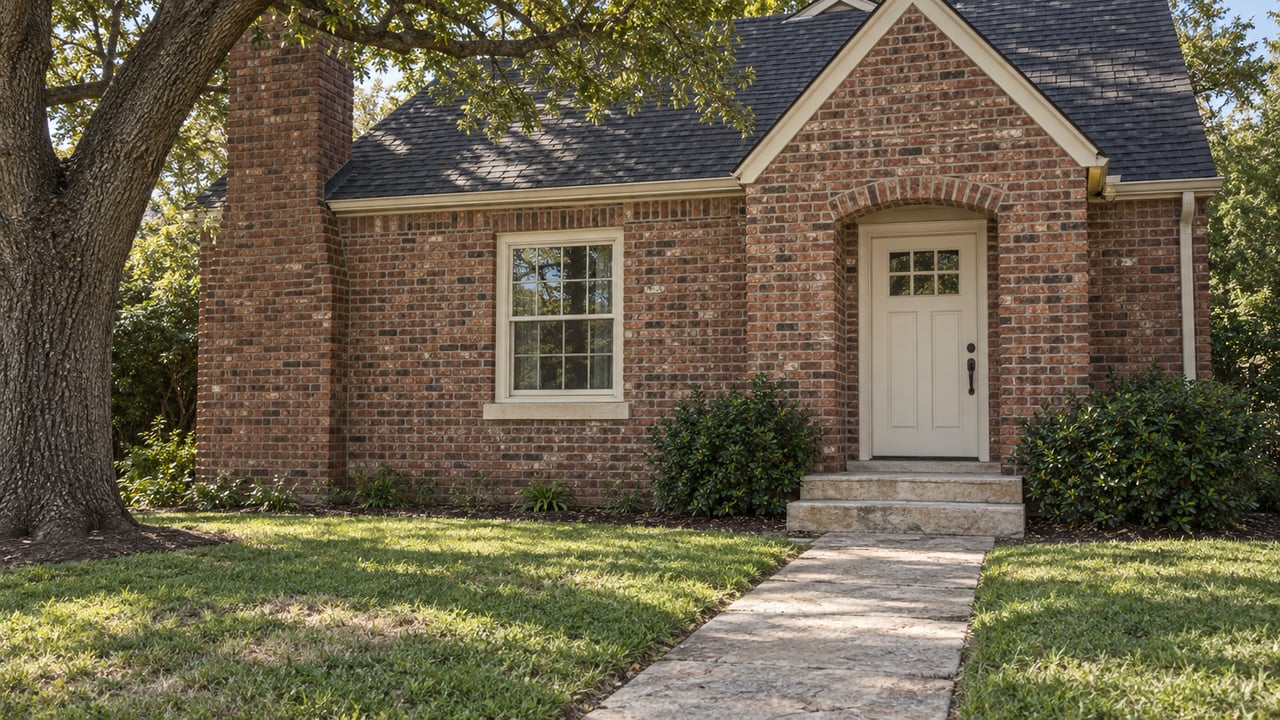
A property owner on Enfield Road, in the Old Enfield section of the same historic district that covers Pemberton Heights, spent well over a year working the case for demolition. First came the zoning change: the city approved a shift from single family to multifamily in early 2024, clearing the way for seven new units on the lot. Then came the second gate, the one that zoning approval never touches. Because the house sat inside the Old West Austin National Register Historic District, the Historic Landmark Commission still had to sign off before anyone could pull a demolition permit, and the neighborhood association still had standing to object months later. The rezoning got the owner nowhere near the finish line. It just moved the fight to a different room.
That gap between what zoning allows and what historic review requires is the detail most buyers in Pemberton Heights never budget for, financially or emotionally, until they own a house and want to change it.
Two Approval Processes, Running on Separate Tracks
Pemberton Heights sits inside the Old West Austin Historic District alongside Old Enfield and Bryker Woods, added to the National Register of Historic Places in 2003 after the three neighborhoods organized against a proposed widening of MoPac that threatened as many as 80 houses. That listing did what it was built to do: it forced additional federal review before highway dollars could touch these streets. What it does not do is override the city's own zoning code. A lot can be rezoned for higher density and still sit under a separate, independent requirement that any ground-up construction or demolition of a contributing structure go before the Historic Landmark Commission first.
The 1106 Enfield Road file makes that separation concrete. The zoning change review sheet for the property, case number C14-2023-0138, notes plainly that base zoning approval does not remove the additional review requirements triggered by the National Register overlay. A buyer reading only the zoning history would have no reason to expect a second process. A buyer who talks to the Historic Preservation Office finds out the two processes were never connected to begin with.
What the City Actually Checks
The overlay is only the outermost layer. Underneath it sit two more, and they apply unevenly depending on the specific house.
Any exterior work on a structure 45 years or older triggers a routine administrative review from the city's Historic Preservation Office, historic district or not. Given that most homes in Pemberton Heights were built between the late 1920s and 1969, this net catches nearly every house in the neighborhood, though interior remodeling falls outside its reach.
A much smaller group of houses carries individual Austin Historic Landmark status, sometimes called "H" zoning. More than 40 properties in Pemberton Heights hold this designation, including landmarks like the Keith House at the neighborhood's Windsor Road entrance and the Reed Estate on Harris Boulevard. These carry the tightest restrictions of the three layers and come with a modest city tax abatement in exchange.
When a demolition or major addition is proposed on a contributing property, city staff weighs it against five specific criteria: architecture, historical association, archaeology, community value, and landscape feature. A house only needs to meet two of the five to justify a landmark recommendation, which is exactly what happened at 1106 Enfield Road.
The Case File on Enfield Road
Staff research on the property traced its construction to 1924 through 1926, part of a subdivided section of the old Pease estate. Its first occupants were realtor John Brizendine Riley, his wife Texann, and their two children. Staff flagged the house as potentially meeting the architecture criterion, an eclectic mix of Spanish Revival and Mission Revival detailing with a tapered stucco chimney and an arched limestone bridge on the grounds, and the historical association criterion, tied to Riley's occupancy.
The Old West Austin Neighborhood Association filed a formal objection at the August 2024 hearing, arguing that the sole purpose of the demolition, like the zoning change before it, was to increase the property's marketability rather than respond to any genuine hardship. The association pointed out that the house had sat vacant for more than a year and that the owner's earlier attempt to sell it under the new multifamily zoning had already failed twice.
Staff's own recommendation still came down in favor of releasing the demolition permit, conditioned on completion of a City of Austin Documentation Package, a formal record of the structure before it comes down. That single condition is worth sitting with. Even when a neighborhood association objects and the city agrees the house has some architectural and historical merit, the outcome on record was not preservation. It was documentation followed by permission.
The Same Script Resurfaces in 2026
A March 2026 filing on another Old Enfield property shows the pattern repeating with a different set of facts, about a year and a half after the Enfield Road hearing. The owners, describing decades of connection to the area going back to their time at the University of Texas, submitted a structural assessment finding the residence in distressed condition, with floor deflections and settlement significant enough that an engineer judged it unsafe to occupy. Environmental testing turned up asbestos in the wall materials, linoleum, sink soundproofing, drain-line wrap, window glazing, and roof flashing, along with lead-based paint in multiple interior and exterior components.
The pairing of an engineering report and an environmental assessment is not incidental. It is the documented path property owners in this district use to make a demolition case stick, structural distress plus contamination findings, submitted together, aimed squarely at the same five-criteria evaluation that governed the Enfield Road case not long before it.
For a buyer eyeing an older house here with plans to substantially rebuild, that is useful advance knowledge. If a seller's disclosure or a prior listing history mentions a structural report or a past demolition attempt, it likely means this exact process has already been run once.
What Renovation Looks Like When It Works
None of this means historic district homes in Pemberton Heights are frozen in place. A recent Old Enfield renovation, covered by Austin Home magazine, shows the more common outcome for owners who work with the review process instead of around it. The homeowners, empty nesters planning extensive travel, hired McWalters Collaborative Architecture and Design and Melde Construction to modernize a 1920s house without losing its street-facing character.
The team restored the original moldings and kept the historic front intact to satisfy Landmark Commission preservation requirements, then built a contemporary addition at the rear, where large sliding doors open the kitchen, family room, and primary suite to the yard, pool, and outdoor kitchen. The compliance burden fell almost entirely on the front of the house. The back was free to become something the owners actually wanted to live in.
That is the practical shape of a successful project here: preserve what faces the street, build what you want behind it.
Before You Waive the Option Period
For a buyer already under contract or about to write an offer, three questions are worth answering before any inspection deadline passes.
Ask whether the specific house carries individual Austin Historic Landmark status or sits only within the broader National Register district. The first comes with real restrictions on exterior change. The second is a lighter, but not absent, layer of review.
Ask how old the structure is. Anything built before roughly 1981 falls inside the 45-year automatic exterior review window, meaning a new roofline, window replacement, or addition will route through the Historic Preservation Office regardless of whether the house has any individual designation.
If the plan involves demolition or a major rebuild, budget time for the Historic Landmark Commission process itself, not just the zoning approval. The Enfield Road case had already been through a 2023 rezoning application and a January 2024 Planning Commission decision before the Historic Landmark Commission even took up the demolition question that August. That is not a delay most contracts are written to absorb without planning for it in advance.
A Few Direct Questions
Does National Register listing mean I cannot renovate my house at all? No. The listing primarily restricts the use of federal funds on projects that would affect the district and requires Historic Landmark Commission review before demolition or new ground-up construction on a contributing property. Ordinary maintenance and interior work fall outside that review.
If my house was built after 1969, does any of this still apply? The National Register district review for demolition and new construction still applies regardless of a specific house's age, since it is tied to the district boundary itself. The separate 45-year automatic exterior review would not yet apply to a newer structure.
Can a neighborhood association actually stop a demolition? The Enfield Road case suggests the association's objection can shape the record and the conversation, but the final staff recommendation in that instance still favored releasing the permit with documentation conditions attached, rather than denying it outright.
Buying into this kind of layered history takes more than reading the National Register plaque. It takes knowing which of the three layers applies to the specific house you are considering, and what that means for the addition or rebuild you already have in mind. If you are looking at a property in Pemberton Heights or elsewhere in the Old West Austin district and want a clear read on what its history actually permits before you write an offer, Camille Casper can walk through the specific designation, review requirements, and timeline for that house before you're past your option period.